In solar cable manufacturing, curing is a critical process that determines the cable’s long-term durability, mechanical strength, and electrical performance. Although it takes place behind the scenes on the production line, curing plays a defining role in the final quality of the product.
What Is Curing?
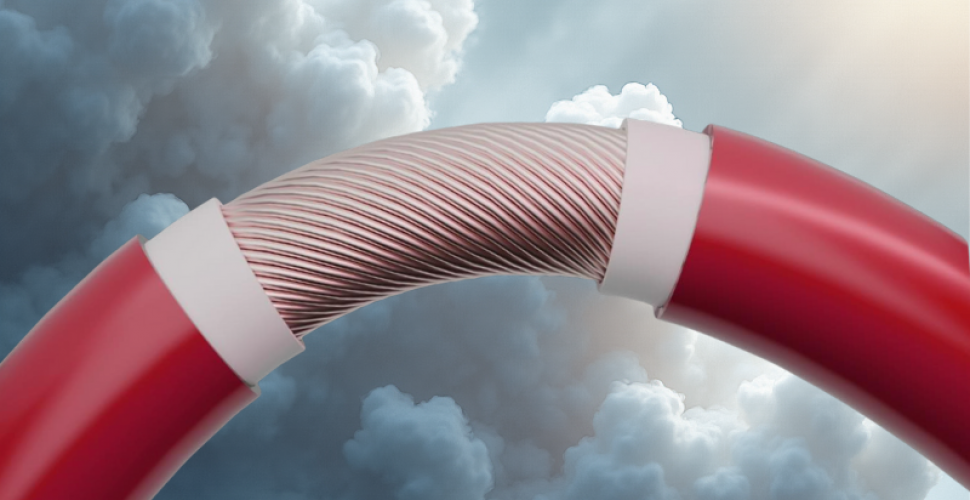
Curing refers to the cross-linking process of the polymer insulation or sheath material—most commonly XLPE (cross-linked polyethylene) or EVA (ethylene-vinyl acetate)—under controlled heat and pressure.
During this process, the molecular structure of the material changes from a thermoplastic state to a thermoset one, improving its thermal, chemical, and mechanical resistance.
Why Is Curing Done?
Without proper curing, the insulation of solar cables can remain soft, thermally unstable, and susceptible to deformation under load. Correctly applied curing ensures that the cable:
-
Withstands high operating temperatures (up to 120°C continuous and 250°C short-circuit conditions),
-
Maintains mechanical flexibility even under extreme outdoor conditions,
-
Resists UV radiation, ozone, and moisture,
-
Retains electrical insulation integrity throughout years of field use.
How Is Curing Performed?
In modern production lines, curing is carried out in continuous vulcanization (CV) lines or silane-based (Sioplas) systems, depending on the cable design.
The process parameters—temperature, pressure, and dwell time—are precisely controlled to achieve uniform cross-linking without degrading the material.
Advanced manufacturers also perform post-curing tests, including:
-
Gel content analysis (to verify cross-linking degree),
-
Thermal aging tests,
-
Insulation resistance and tensile strength measurements.
These tests ensure that every cable leaving the factory meets IEC 62930, EN 50618, or equivalent international standards.
How Does Curing Affect Product Quality?
The curing stage directly impacts the lifespan, safety, and efficiency of solar installations. Properly cured cables prevent:
-
Insulation cracking caused by temperature fluctuations,
-
Premature degradation under UV exposure,
-
Electrical leakage or short-circuit risks due to material breakdown.
In short, a well-cured cable means a reliable solar system.
That’s why leading manufacturers place great emphasis on continuous quality control during the curing phase—because in solar energy systems, every connection matters.